From Training to Change:
Tiny Feet Big Steps impacts Ghana.
One of the most encouraging aspects of Tiny Feet Big Steps (TFBS) is seeing what happens after the conference ends.
The goal is not simply to bring healthcare professionals together for several days of learning. It is to equip clinicians with practical skills, encourage multidisciplinary collaboration, and support them as they take those skills back to their own hospitals and communities.
A recent Month Three Quality Improvement Report from St. Patrick’s Hospital in Offinso-Maase, Ghana, provides a powerful example of this model in action. The report, led by Dr. Dorcas Naa Dedei Aryeetey and Gloria Asamoah, documents how learning from TFBS 2026 was translated into a responsive, locally led quality-improvement initiative.
Responding to what the data revealed
Following TFBS 2026, the St. Patrick’s Hospital team had initially identified several potential areas for quality improvement, including neonatal jaundice, Kangaroo Mother Care and infection prevention.
But when June data showed a concerning increase in newborn admissions associated with birth asphyxia, the team changed course.
Of 109 neonates admitted to the Newborn Unit that month, 15 were admitted because of birth asphyxia, with four deaths attributed to severe birth asphyxia. The clinical team recognized that this required an immediate response.
Working with Madam Audrey Marian Nti, Offinso Municipal Director of Health Services, the team developed a three-day training focused on Essential Newborn Care (ENC 1 & 2) and Partograph Interpretation. The addition of partograph training was particularly important because it addressed an upstream contributor to birth asphyxia by helping clinicians identify prolonged or obstructed labour and fetal compromise earlier.
This is exactly the kind of responsive quality improvement that TFBS seeks to encourage: recognize a problem, use the available data, bring the right people together, and put practical solutions into action.
136 healthcare professionals, five districts, one shared goal
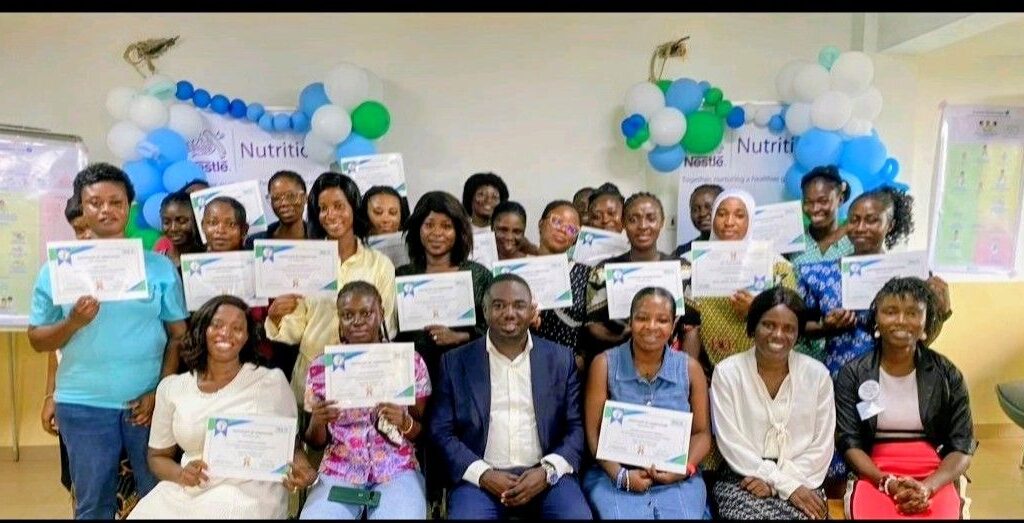
Held July 7–9, the training brought together 136 healthcare professionals from St. Patrick’s Hospital and facilities across five districts.
Paediatricians, obstetricians, medical officers, nurses and midwives trained together in neonatal resuscitation, Essential Care for Every Baby and partograph interpretation.
The multidisciplinary approach is particularly significant. TFBS has always placed value on doctors and nurses learning together because improving newborn outcomes depends on the entire team—not on one profession working in isolation.
The training extended beyond St. Patrick’s Hospital, involving healthcare professionals from numerous facilities across the surrounding districts. In doing so, the programme began creating a community of practice that can carry knowledge and skills back into multiple facilities.
Knowledge becomes meaningful when it becomes practice
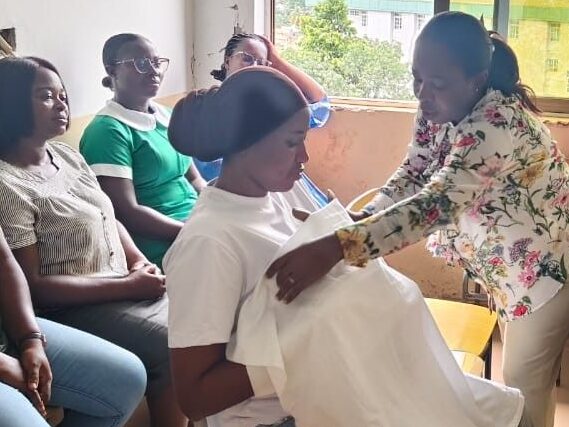
The team combined classroom teaching with hands-on simulation, including practical stations for neonatal resuscitation and essential newborn care.
Participants demonstrated strong baseline knowledge, with ENC pre-test scores averaging 96–98% and post-test scores reaching a consistent 98%. More importantly, the report recognizes that knowledge scores alone do not tell the whole story. Direct observation during hands-on simulation identified opportunities to strengthen practical skills, leading the team to plan future OSCE-style assessments and knowledge-retention checks.
That willingness to look beyond the numbers—and to continually refine the approach—is another important part of quality improvement.
The TFBS model, carried forward
The St. Patrick’s Hospital team explicitly connected its work to several principles emphasized during TFBS 2026: data-driven quality improvement, co-training of doctors and nurses, neuroprotection, and practical, low-technology, context-adapted skills.
Perhaps most importantly, this was not an intervention designed and imposed from outside. It was identified, adapted and led locally by healthcare professionals responding to the needs of their own patients and communities.
That is something worth celebrating.
Recognizing the people behind the work
ICHA is particularly proud to recognize Dr. Dorcas Naa Dedei Aryeetey, Paediatrician at St. Patrick’s Hospital, and Gloria Asamoah, Newborn Unit In-Charge and a midwife with an MPhil in Paediatric Nursing.
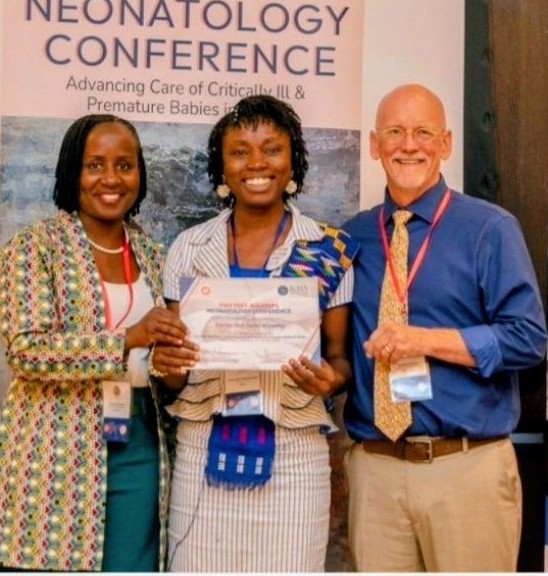
Gloria was also the Best Poster Presentation Award winner at TFBS 2026, making this follow-up work an especially meaningful example of how ideas shared at TFBS can continue to develop after participants return home.
They were supported by Ama Twumwaa Owusu, Patricia Korewaa Essah, Esther Agyemang Yeboah, the Obstetrics & Gynaecology team, nursing leadership, quality-improvement staff and others who contributed to the programme. The work was also strengthened by the support of the Nestlé Nutrition Institute, St. Patrick’s Hospital leadership and the Offinso Municipal Health Directorate.
From one training to a growing movement
The report describes the outcome simply but powerfully:
“Last year we held a training. This year we built a movement.”
That is the promise of Tiny Feet Big Steps.
The conference itself is only one part of the work. The greater impact comes when clinicians take what they have learned, adapt it to their own setting, teach their colleagues, and use it to improve care for newborns and their families.
At St. Patrick’s Hospital, that process is already underway—with a growing network of healthcare professionals committed to helping every newborn have a safe first breath.
ICHA is grateful to Dr. Dorcas Naa Dedei Aryeetey, Gloria Asamoah and their colleagues for sharing this work, and we are proud to see the principles of Tiny Feet Big Steps being translated into meaningful, locally led action.