
Meet Dr. Andrew:
We teach what we do. We do what we teach.
For Dr. Andrew Mwanjonde, improving newborn care means continually learning, applying evidence-based practices, and sharing knowledge with colleagues across Africa.
For Dr. Andrew, one of the most rewarding moments in medicine is seeing a baby who once needed intensive care finally go home with their family.
“You take care of that baby and you give that baby into a mama’s hand or her parents’ hand, and they get to go home,” he explains.
It is a simple reminder of why improving neonatal care matters—and what motivates Andrew in his work as an ICHA pediatrician in Tanzania.
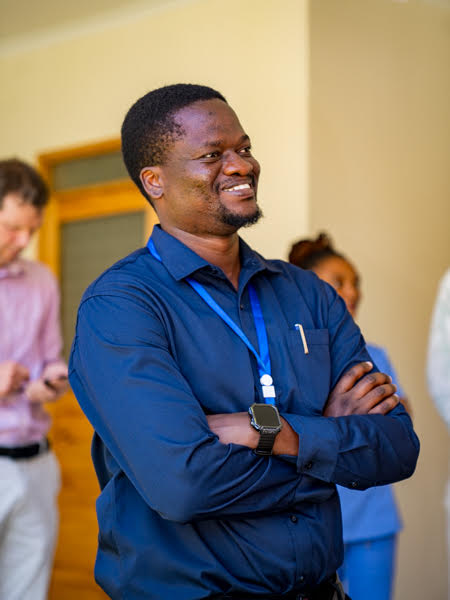
Caring for babies, building clinical expertise
Dr. Andrew is a pediatrician with experience in both inpatient and outpatient care. He trained in southern Tanzania and Arusha before completing his pediatric residency in Nairobi, Kenya. Today, he divides his time among the ALMC Neonatal Intensive Care Unit (NICU), inpatient wards, and the Arusha Pediatric & Maternal Care Centre (APMC), an ICHA clinic that opened in April 2026 to expand access to care for mothers and children.
His work is grounded in evidence-based medicine, with a strong interest in research and education as tools for sustainable improvements in child health.
Through his work with the Institute for Child Healthcare Africa (ICHA), Andrew has continued to develop his skills, growing from a pediatric medical officer (registrar) into a pediatrician. ICHA’s commitment to research, education, and high-quality care has helped support his professional journey.
But Andrew’s contribution extends beyond the babies and families he cares for at ALMC and APMC. He also teaches at ICHA’s Tiny Feet Big Steps (TFBS) African neonatology conferences, sharing his clinical experience with physicians and nurses from across the continent.
His work embodies ICHA’s guiding refrain: We teach what we do. We do what we teach.
Finding practical solutions together
Newborns face significant health challenges in Tanzania and throughout sub-Saharan Africa. Improving outcomes requires clinical expertise, skilled healthcare professionals, and approaches that can be implemented within the resources available to hospitals.
Andrew sees collaboration and shared learning as essential to meeting these challenges.
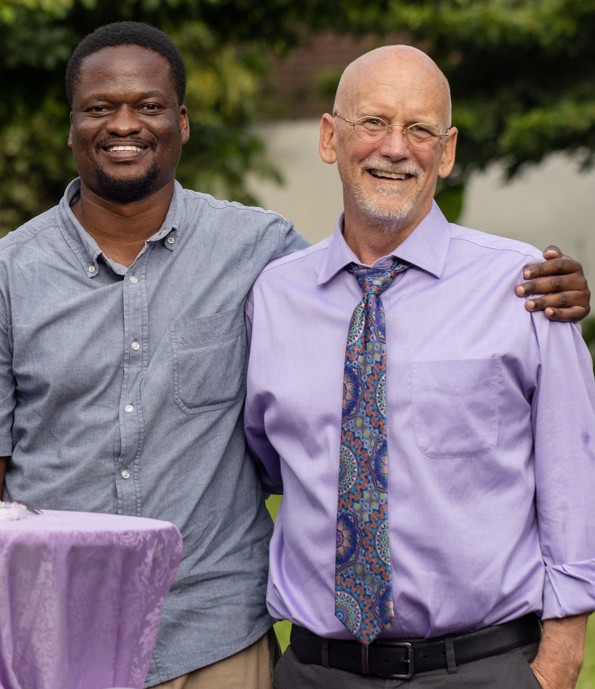
This is central to the purpose of Tiny Feet Big Steps. The conferences bring healthcare professionals together to share practical skills, discuss challenges, and learn from one another’s experiences. Clinicians can build on what has worked in their own settings while incorporating advances and evidence from elsewhere.
Andrew believes that African clinicians have valuable knowledge to contribute to this exchange.
Over years of caring for newborns, teams have developed approaches suited to the realities of their hospitals. Combining those lessons with evidence and experience from other parts of the world can help clinicians develop practical solutions that benefit babies across Africa.
By teaching at TFBS, Andrew helps extend that knowledge to colleagues who can apply it in their own hospitals and communities.
Investing in clinicians to improve outcomes
For ICHA, supporting clinicians like Andrew is central to strengthening newborn care. Education is not simply about transferring information. It is about helping healthcare professionals develop the skills and confidence to apply evidence-based practices, share their expertise, and improve care within their own hospitals.
The connection between clinical practice and teaching is particularly important. Clinicians who work at the bedside understand the challenges their colleagues face. When they teach, they can share practical lessons grounded in experience, while remaining open to new ideas and approaches.
Through its clinical programs, the Arusha Pediatric & Maternal Care Centre, and Tiny Feet Big Steps conferences, ICHA supports this cycle of learning and improvement: providing care, building clinical capacity, and sharing knowledge that can help improve outcomes for newborns, children, and families.
Andrew’s journey from intern doctor to pediatrician, and from clinical learner to conference instructor, illustrates the value of investing in African healthcare professionals and supporting them as both practitioners and educators.
Ultimately, his goal is straightforward: improve care, improve outcomes, and help more babies survive and thrive.
Every baby who leaves the NICU and returns home with their family represents a meaningful step toward that goal.
And every clinician who takes what they have learned and shares it with others helps that progress reach even further.
We teach what we do. We do what we teach.