
Building Tanzania’s Future of Pediatric Care:
A Conversation with Dr. Philipo.
Summer 2026
One of the most lasting ways to improve healthcare in Africa is to invest in African physicians. When doctors receive advanced specialty training and return to serve their communities, they bring home far more than clinical expertise.
They strengthen hospitals, mentor future generations of healthcare providers, improve systems of care, and help shape national health policy.
Dr. Godbless Philipo is one of those physicians. A Tanzanian pediatrician supported by the Institute for Child Healthcare Africa (ICHA), he is completing his pediatric residency at the University of Minnesota and plans to pursue fellowship training in Neonatal-Perinatal Medicine. His vision extends well beyond his own career—to helping ensure that every newborn in Tanzania has access to high-quality, evidence-based care.
We recently asked Dr. Philipo about his training, his goals, and the future he hopes to help build.
Q: You’ve now been in Minnesota for a year. Tell us about your training and what’s next.
Dr. Philipo: I have been in Minnesota for one year. I arrived at the end of June last year and immediately started my pediatric residency training. I am planning to return to Tanzania for one month in March 2027 as part of my global health elective. During that time, I will be working at both Selian Hospital and Arusha Lutheran Medical Centre (ALMC).
It will be a wonderful opportunity to continue learning while also sharing the knowledge and experience I have gained so far to help improve pediatric healthcare delivery. I am especially excited to see and be part of the new Arusha Pediatric & Maternal Care Centre (APMC).
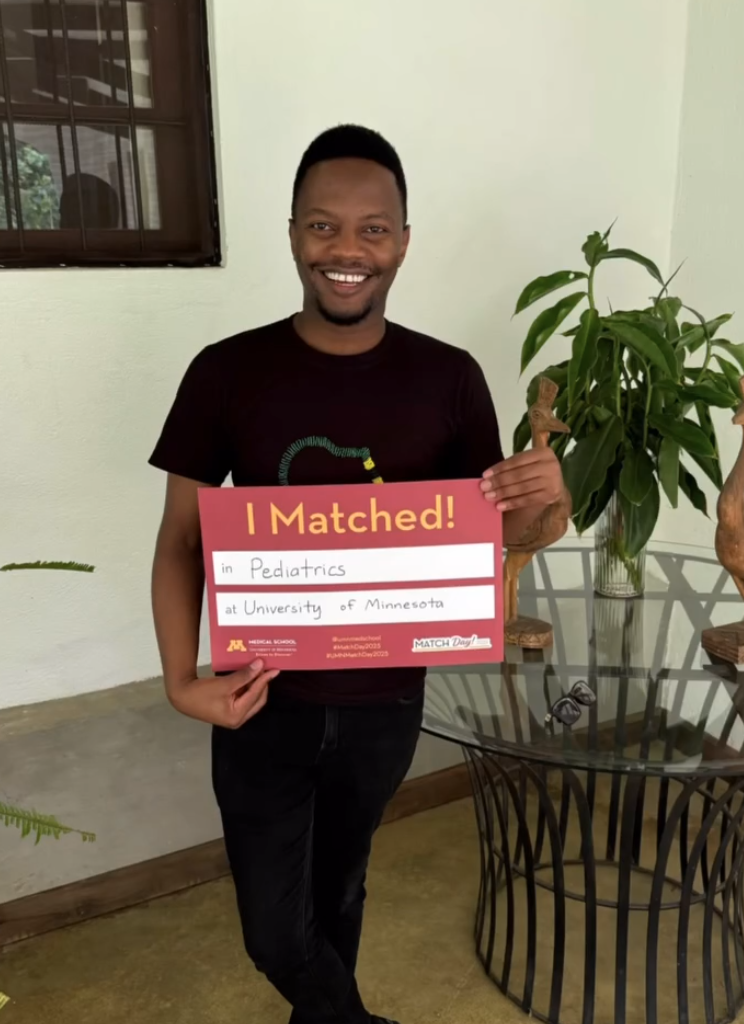
Looking ahead, I plan to apply for a Neonatal-Perinatal Medicine fellowship in the summer of 2027. If all goes well, I hope to begin fellowship training in July 2028 after completing my pediatric residency in June.
Q: Has there been a moment during your training that made you think, “I want to bring this home to Tanzania?”
Dr. Philipo: There have been many moments.
Some are simple changes, while others involve larger healthcare systems. One thing I would like to see is a more formal physician handover between shifts. Good handovers help maintain consistency in patient care, yet they are not always emphasized during medical training.
Simple things, like developing standardized seizure management protocols, can make an enormous difference. They give junior clinicians clear pathways to follow during emergencies and help ensure consistent, high-quality care.
Q: Are there systems or protocols you’ve seen that could be adapted successfully in low-resource settings?
Dr. Philipo: Absolutely.
Formal physician handovers are one example. We already have strong neonatal protocols, but we need more standardized guidance for general pediatric emergencies such as seizures, asthma, and acute respiratory distress.
I also appreciate the emphasis on family-centered bedside rounds. Including families more directly in care improves communication and strengthens trust.
Finally, I am interested in exploring whether high-flow nasal cannula therapy could be adapted for low-resource settings in a practical and sustainable way.
“My ideal world is one in which a premature baby born in Tanzania receives the same quality of care as a premature baby born in the United States.”
Dr. Philipo
Q: How can trained Tanzanian specialists strengthen the entire healthcare system?
Dr. Philipo: Specialty training provides an enormous amount of knowledge that can improve care not only for individual patients but for entire healthcare systems.
Specialists can advocate for change within hospitals and nationally through professional organizations like the Pediatric Association of Tanzania (PAT). That is one way we improve healthcare beyond our own clinics.
Another important contribution is developing standardized clinical protocols and distributing them across the country after expert review and consensus. Because there are relatively few specialists compared with the number of patients, junior doctors and interns are often the first clinicians to care for children. Giving them evidence-based frameworks for managing common conditions helps improve care across the entire health system.
Q: What keeps you motivated when the journey becomes difficult?
Dr. Philipo: Determination—and having a clear goal.
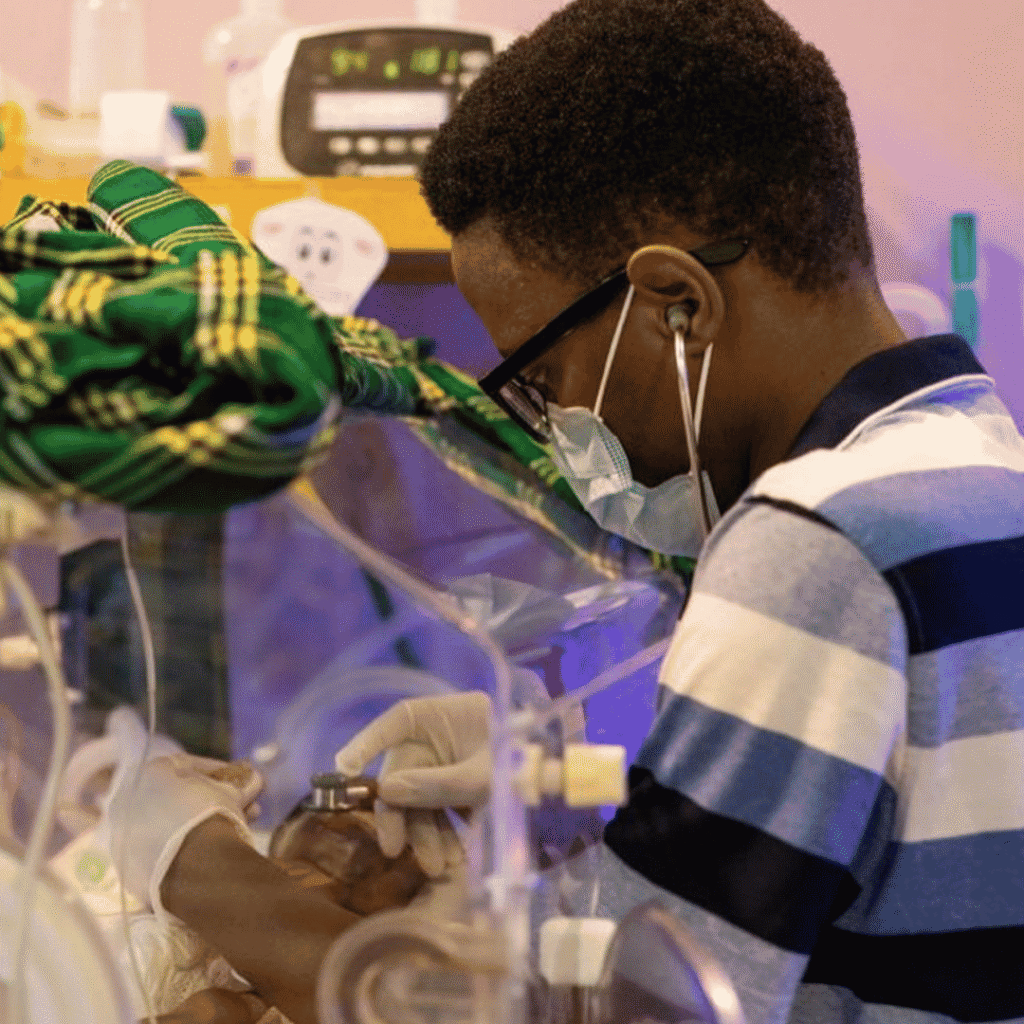
I decided I wanted to become a neonatologist during my fifth year of medical school at Muhimbili University in 2019. Since then, I have been working toward that goal. There are easier and shorter career paths I could have chosen, but I know I would not be satisfied. That goal continues to motivate me, even on the days when residency feels especially challenging.
Q: When you imagine yourself ten years from now, what impact do you hope your work will have had on children and families in Tanzania?
Dr. Philipo: Over the past few years, I have developed a real appreciation for research.
Research is one of the strongest ways to convince people to change because it provides evidence—and even more powerful is evidence generated from their own population. I hope the research I conduct in Tanzania and across sub-Saharan Africa will help governments prioritize children’s health and help clinicians deliver even better care.
My ideal world is one in which a premature baby born in Tanzania receives the same quality of care as a premature baby born in the United States.
I know that is a long-term goal. But if we can achieve even half of that, it will transform the lives of children born in low-resource settings.
Building Lasting Change
Training African pediatric specialists is about far more than one physician earning another degree. It is an investment in leaders who will teach future generations, develop clinical protocols, conduct locally relevant research, strengthen hospitals, and advocate for better healthcare systems.
Sustainable change happens when expertise grows from within.
Through partnerships that equip and empower physicians like Dr. Godbless Philipo, ICHA is helping build a future where more African children receive the high-quality care they deserve, not just today, but for generations to come.