
Newborn Care Capacity in Liberia
Turning learning into practice
Through Tiny Feet Big Steps (TFBS), the Institute for Child Healthcare Africa (ICHA) is helping healthcare professionals share practical skills, strengthen local leadership, and improve newborn care—even where a neonatal intensive care unit is not available.
When healthcare professionals from Liberia attended Tiny Feet Big Steps (TFBS) neonatology conferences in 2024 and 2026, they accepted an important responsibility: return home with new knowledge and a commitment to teach their colleagues.
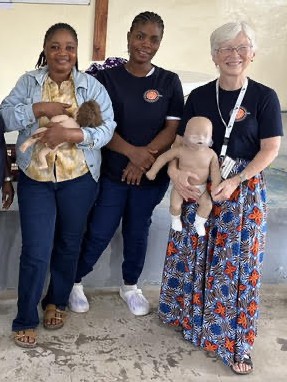
With support that made their participation possible, staff from Eternal Love Winning Africa (ELWA) in Liberia brought this commitment to life. Two nurses and two midwives recently led training for fellow staff, sharing what they had learned and adapting it to their clinical setting.
This is central to ICHA’s approach: working alongside African healthcare professionals so that training reaches beyond conference participants and strengthens care within their institutions.
Turning learning into practice
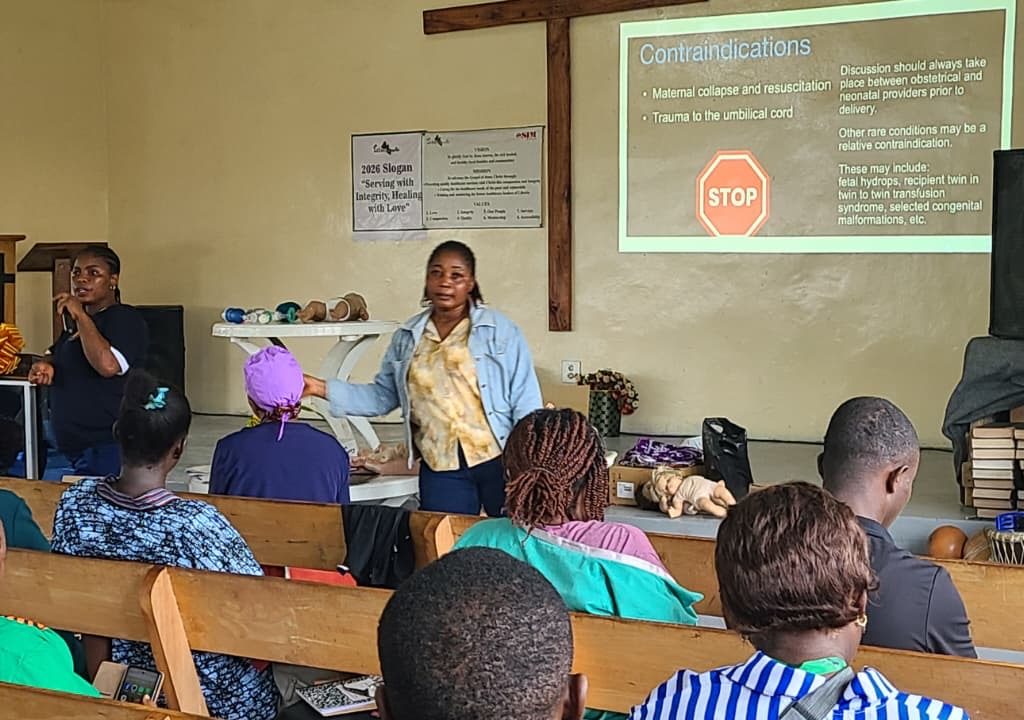
The sessions covered neonatal resuscitation, preparation for delivery, delayed cord clamping, infection prevention, kangaroo mother care, breastfeeding, and continuous positive airway pressure (CPAP) to help babies who struggle to breathe.
Some lessons offered improvements to familiar techniques. ELWA staff had used CPAP before, but at TFBS they learned a different way to arrange the water bottles used in bubble CPAP, making the setup easier to manage at the bedside.
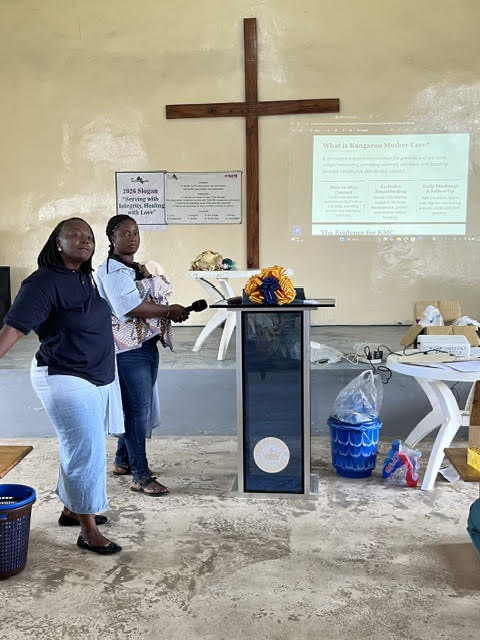
Other topics prompted lively discussion. Staff explored how to encourage kangaroo mother care—holding babies skin-to-skin for extended periods—and create spaces where mothers could do so comfortably and safely.
Using a relatively heavy newborn manikin, Martha demonstrated how two people could position a baby safely. She then continued interacting with staff while carrying the manikin against her chest, illustrating how mothers can remain mobile during kangaroo care.
Delayed cord clamping generated questions about babies needing immediate breathing support, cesarean deliveries, and the benefits of allowing placental blood to reach the newborn. The range of potential benefits surprised staff and prompted them to reconsider existing practices. Early breastfeeding and its benefits for newborn blood sugar levels also sparked discussion.
Building confidence and local leadership
Teaching was a learning experience for the instructors, too.
The nurses spent considerable time preparing together, working to explain research findings in practical terms. One midwife was particularly skilled at recognizing when colleagues were struggling and finding clearer ways to communicate.
By the end of the first day, the instructors were more confident. When training was repeated in late September for the remaining staff, one midwife taught alongside the lead instructor with noticeably greater confidence.
This peer-to-peer approach extends the value of ICHA-supported training. A conference can equip a small group of clinicians; when they become teachers, their knowledge reaches colleagues who could not attend.
Changing what feels possible
ELWA does not currently have a neonatal intensive care unit. Only three NICUs serve the capital region, including one recently established. Yet meaningful improvements in newborn care are possible even without a dedicated NICU.
After TFBS, ELWA’s obstetric team began practicing delayed cord clamping. Midwives reported noticing differences in newborns’ condition, and the teaching sessions reinforced the practice and encouraged medical interns to adopt it.
The team hopes to build on this progress through earlier breastfeeding, greater use of kangaroo mother care, more consistent delayed cord clamping—including during cesarean deliveries—and improved neonatal resuscitation skills. Newborn nutrition is another priority.
The experience is also challenging the belief that practices introduced through international training cannot work in Liberia or elsewhere in Africa. By adapting techniques and teaching one another, ELWA clinicians are demonstrating what local teams can accomplish with practical knowledge, collaboration, and continued support.
Extending the impact
ICHA’s investment in clinical education goes beyond conference attendance. It supports African clinicians as they become trainers, mentors, and leaders in their workplaces.
Looking ahead, there is hope that nursing managers and the chair of pediatrics at ELWA can attend TFBS in 2027. Their participation could build broader institutional support for the changes bedside staff are implementing, although funding remains a significant challenge.
The impact of training is measured in knowledge shared, practices reconsidered, and confidence built among clinicians caring for newborns every day.
Through Tiny Feet Big Steps and its partnerships, ICHA is helping turn learning into local action—strengthening clinical capacity so that more newborns can survive and thrive.
With thanks to Louise Omdahl for sharing this story and for her commitment to strengthening newborn care through education, collaboration, and local clinical leadership.