
The Challenge
Over the past three decades, significant progress has been made in improving child survival worldwide. Expanded immunization programmes, improved nutrition, better management of childhood illnesses, and increased access to healthcare have contributed to substantial reductions in infant and under-five mortality. However, this progress has not been matched in neonatal survival.
The First 28 Days
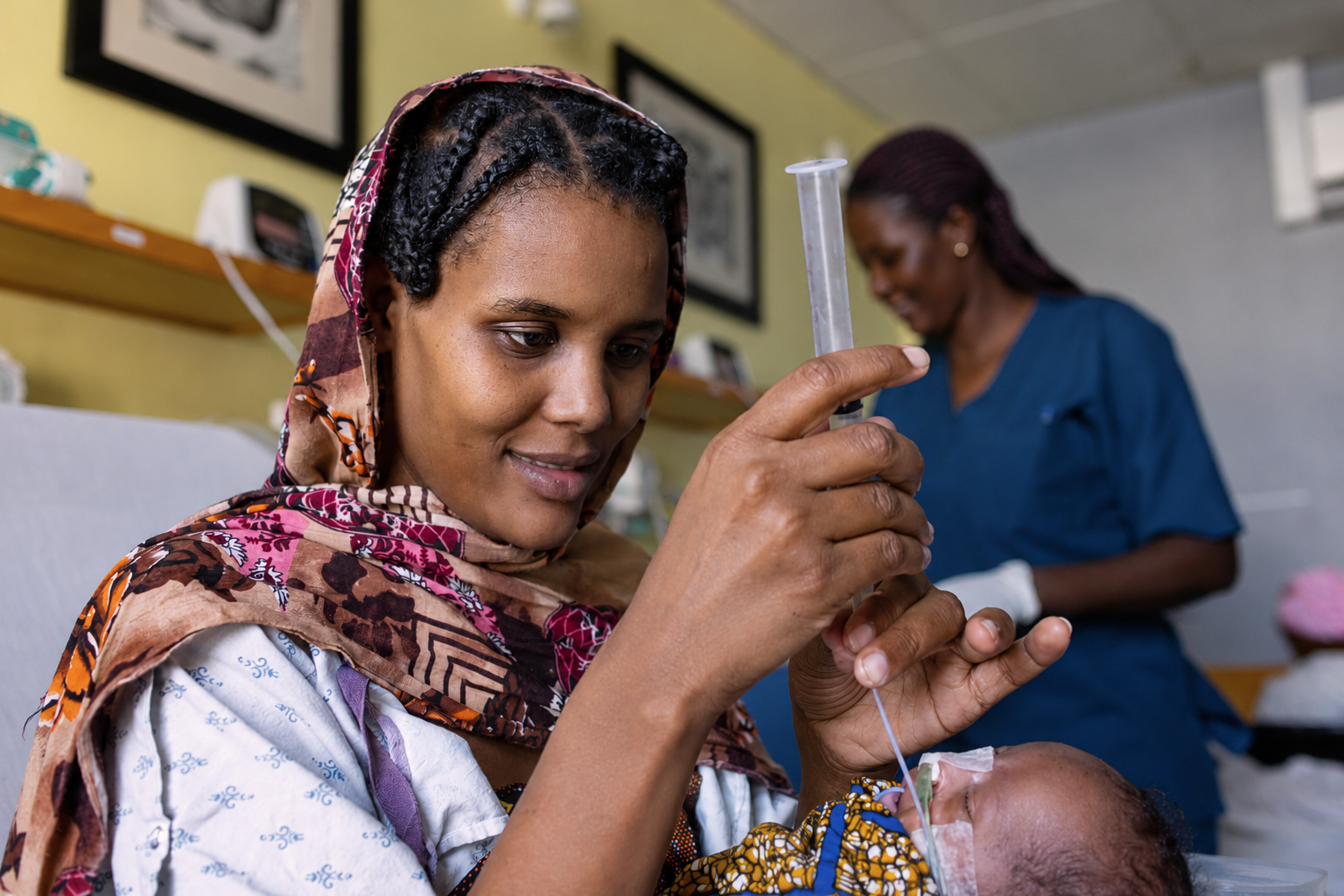
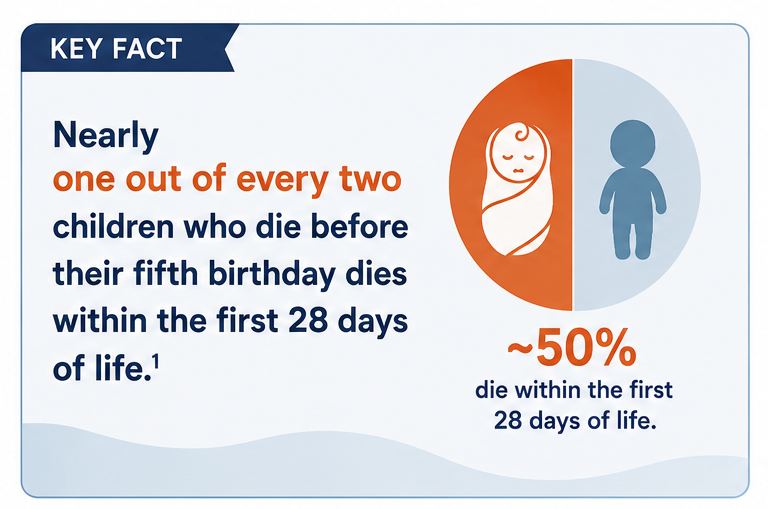
Today, nearly half of all deaths among children under the age of five occur during the first 28 days of life. Approximately 2.3 million newborns die every year, or more than 6,500 babies every day. The majority die from prematurity, birth complications, infections, and respiratory distress—conditions that are largely preventable or treatable through timely, evidence-based care. Around 80% of newborn deaths occur among babies born prematurely, too small, or sick at birth, highlighting the importance of quality care during pregnancy, delivery, and the neonatal period.
Sub-Saharan Africa Faces the Greatest Burden
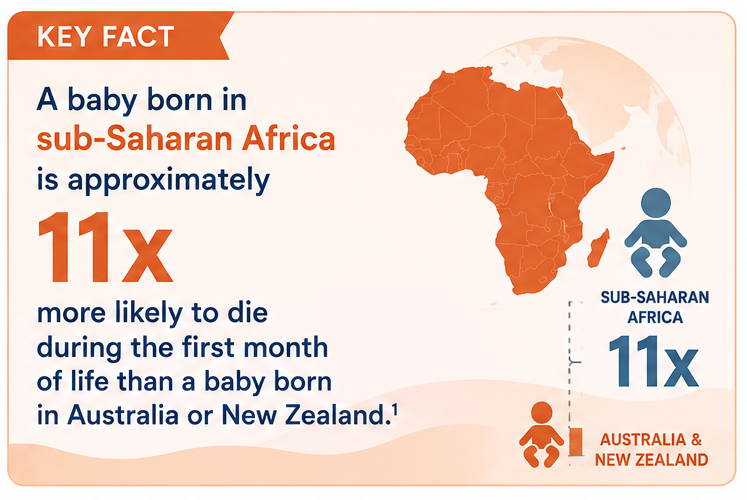
Sub-Saharan Africa carries the highest burden of neonatal mortality of any region in the world. Although important progress has been made in reducing deaths among older children, the decline in neonatal mortality has been considerably slower. Current projections indicate that 64 countries will fail to meet the Sustainable Development Goal target for neonatal survival by 2030 unless urgent action is taken, with many of those countries located in sub-Saharan Africa.
The challenge extends beyond the neonatal period. Across many African countries, children continue to experience limited access to specialised paediatric services, delayed diagnosis, shortages of trained healthcare professionals, inadequate referral systems, and significant disparities in access to quality healthcare between urban and rural populations. While these challenges vary by country and region, they continue to contribute to avoidable illness, disability, and death.
The First Week of Life Is the Most Dangerous
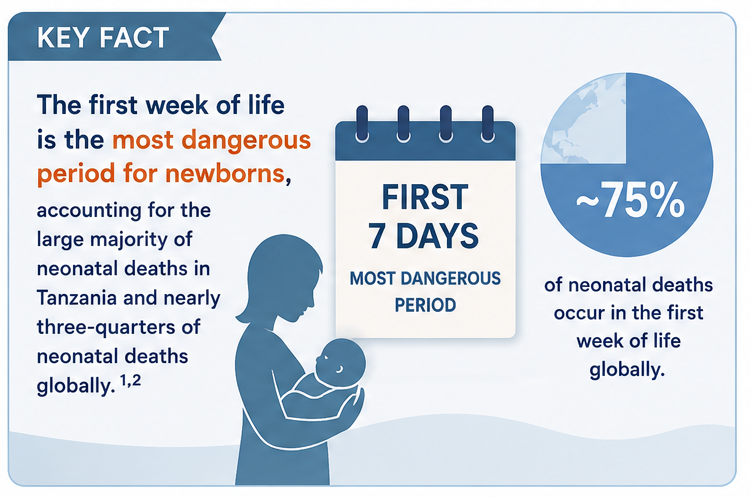
Tanzania reflects both the progress that has been achieved and the work that remains. Under-five mortality has fallen dramatically over the past two decades, from approximately 147 deaths per 1,000 live births in 1999 to approximately 43 per 1,000 today. Infant mortality has also declined substantially. Neonatal mortality, however, remains around 24 deaths per 1,000 live births and now accounts for more than half of all infant deaths. Most neonatal deaths occur during the first week of life, when access to skilled healthcare, appropriate equipment, effective referral systems, and well-trained clinical teams has the greatest potential to improve outcomes.
Northern Tanzania faces many of these same challenges. Demand for specialised maternal, neonatal, and paediatric services continues to increase as the population grows, while shortages of paediatricians, neonatologists, specialised nurses, and other allied health professionals place considerable pressure on the healthcare system. At the same time, many hospitals continue to face constraints in infrastructure, diagnostics, referral pathways, and ongoing professional development.
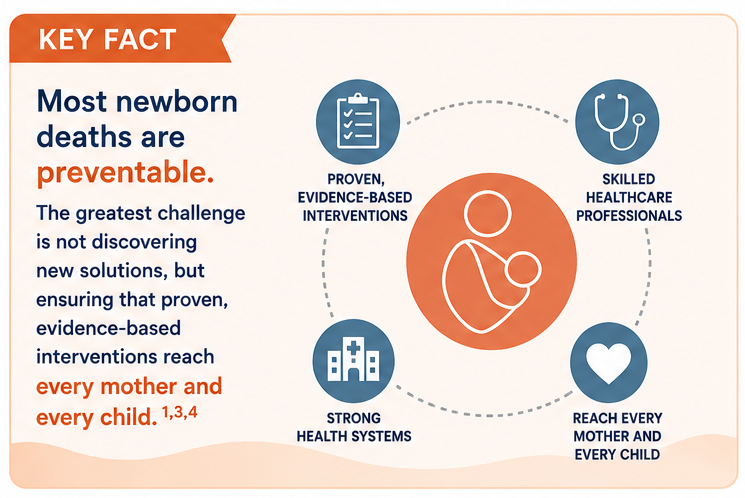
Most newborn deaths are preventable
Despite these challenges, experience from Tanzania and across Africa has demonstrated that significant improvements are possible. Investments in practical clinical training, quality improvement, neonatal systems, mentorship, and context-appropriate technology have consistently shown measurable improvements in newborn survival. These experiences demonstrate that the greatest opportunity lies not in discovering entirely new solutions, but in strengthening healthcare systems to deliver proven interventions consistently, effectively, and at scale.
Citations
- World Health Organization & UNICEF. Survive and Thrive: Transforming Care for Every Small and Sick Newborn. 2019. https://www.who.int/publications/i/item/9789241515887
- World Health Organization. Newborn Mortality. Updated March 14, 2024. https://www.who.int/newsroom/fact-sheets/detail/newborn-mortality .
- Ministry of Health (Tanzania Mainland), Ministry of Health (Zanzibar), National Bureau of Statistics, Office of the Chief Government Statistician, and ICF. Tanzania Demographic and Health Survey and Malaria Indicator Survey 2022: Final Report. 2023. https://dhsprogram.com/publications/publication-FR382-DHS-Final-Reports.cfm
- World Health Organization & UNICEF. Every Newborn: An Action Plan to End Preventable Deaths. 2014. https://www.who.int/publications/i/item/9789241507448