Research & Innovation
Supporting African clinicians to generate evidence, improve clinical practice, and save newborn lives.
At its core, Tiny Feet Big Steps (TFBS) Neonatology Conferences disseminates the best of neonatology knowledge and provides skills-training to help small and sick babies across Africa survive and thrive. Sometimes, though, existing medical knowledge isn’t good enough or isn’t directly implemented appropriately in the settings where conference participants serve.
Since 2024, TFBS has provided research training and mentorship to help conference participants advance science, gather new information, and discover how best to apply current scientific knowledge to the benefit of small, sick babies in local settings.
Tiny Feet Big Steps research component reflects ICHA’s three pillars of impact: Care, Capacity, and Catalyst.
- Care: we help heal sick and vulnerable newborns;
- Capacity: we equip healthcare professionals with the knowledge and skills to improve neonatal outcomes; and
- Catalyst: we advance research, innovation, and the application of evidence to local healthcare challenges.
Research conducted by TFBS participants is already helping translate new knowledge into better care for small and sick newborns across Africa and around the world.
Nairobi 2026
Showcasing African Research and Excellence at TFBS Nairobi 2026
At the recent Arusha and Nairobi conferences, conference participants were given the opportunity to submit summaries of their research and implementation projects for possible presentation at the meetings. Submissions were then judged for relevance and quality by panels of blinded reviewers; judges including physicians, nurses, and scientists, mostly from Africa but also including some faculty members from North America, evaluated and ranked the presentations.
For TFBS Nairobi in 2026, submissions were received from countries spanning East to West Africa, and eight were chosen for presentation (four orally, four as posters for discussion). Topics covered a broad range of neonatal subjects.
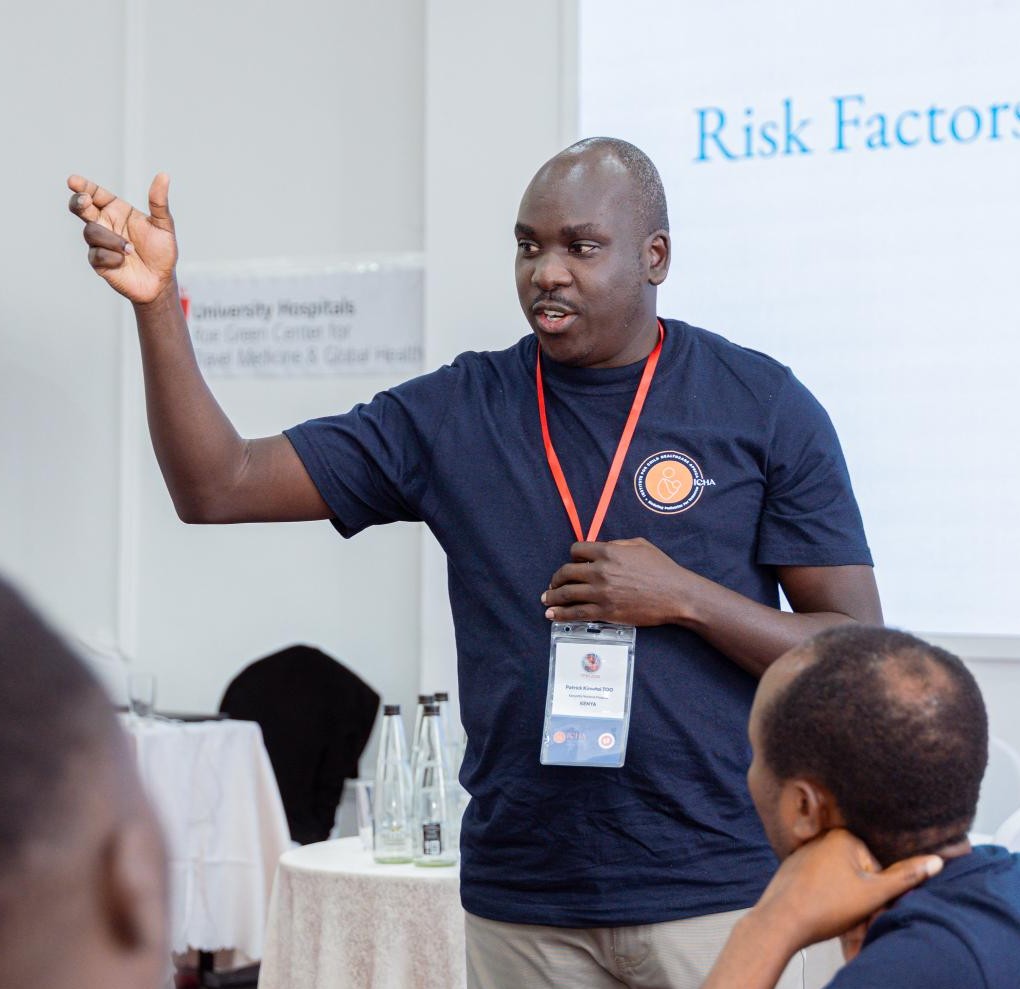
The Nairobi 2026 awards for best presentations were given to:
Dr. Unangoni Bulawayo from Botswana for Neonatal Outcomes at Nyangabgwe Hospital.
Dr. Cecilia Kiilu from Kenya for Diagnostic Similarity of Point-of-Care Lung Ultrasound Compared to Chest X-ray in Neonates with Respiratory Distress.
Dr. Einstein Kibet from Kenya for Performance Contracting and Perinatal Audits Cut Neonatal Mortality by 16.7%.
Ms. Kristy Ndidi Apraku-Kusi from Sierra Leone for Reducing Neonatal Hypothermia Within Four Hours of Admission.
Arusha 2026
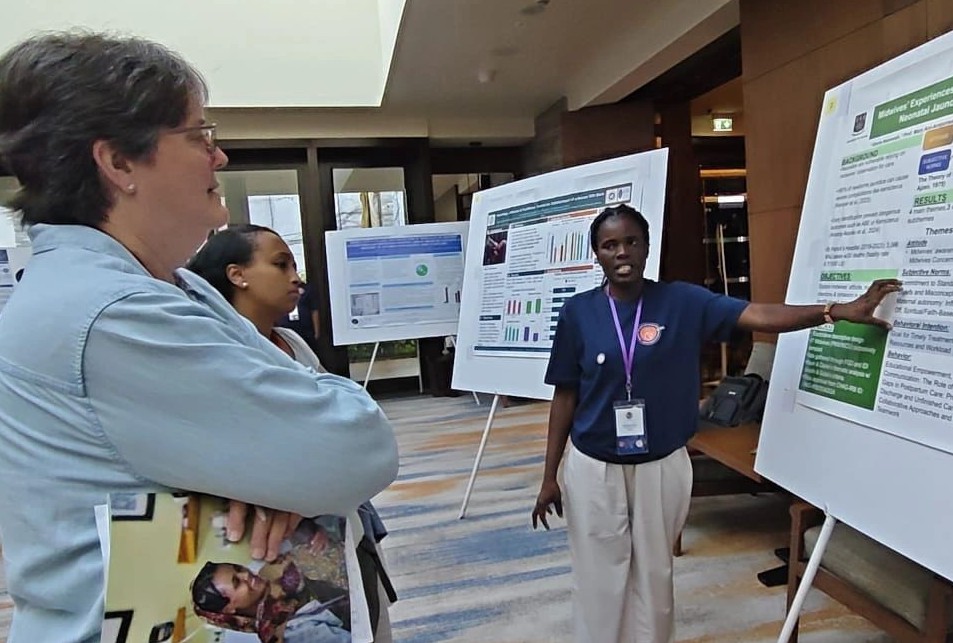
Ghanaian Midwife Wins First Place at TFBS Arusha 2026
Congratulations to Gloria Asamoah, a dedicated healthcare professional from Ghana whose poster presentation earned First Place at the Tiny Feet Big Steps (TFBS) Neonatology Conference in Arusha, Tanzania, in 2026!
Her award-winning research, “Midwives’ Experiences in Early Identification and Management of Neonatal Jaundice: A Qualitative Inquiry,” explored the important role midwives play in recognizing and managing neonatal jaundice, an important aspect of protecting newborn health.
As Gloria reflected: “Investing in frontline nurses and midwives saves newborn lives. I’m proud to bring this knowledge back to Ghana.”
Therapeutic Cooling Study Recognized at TFBS Arusha 2026
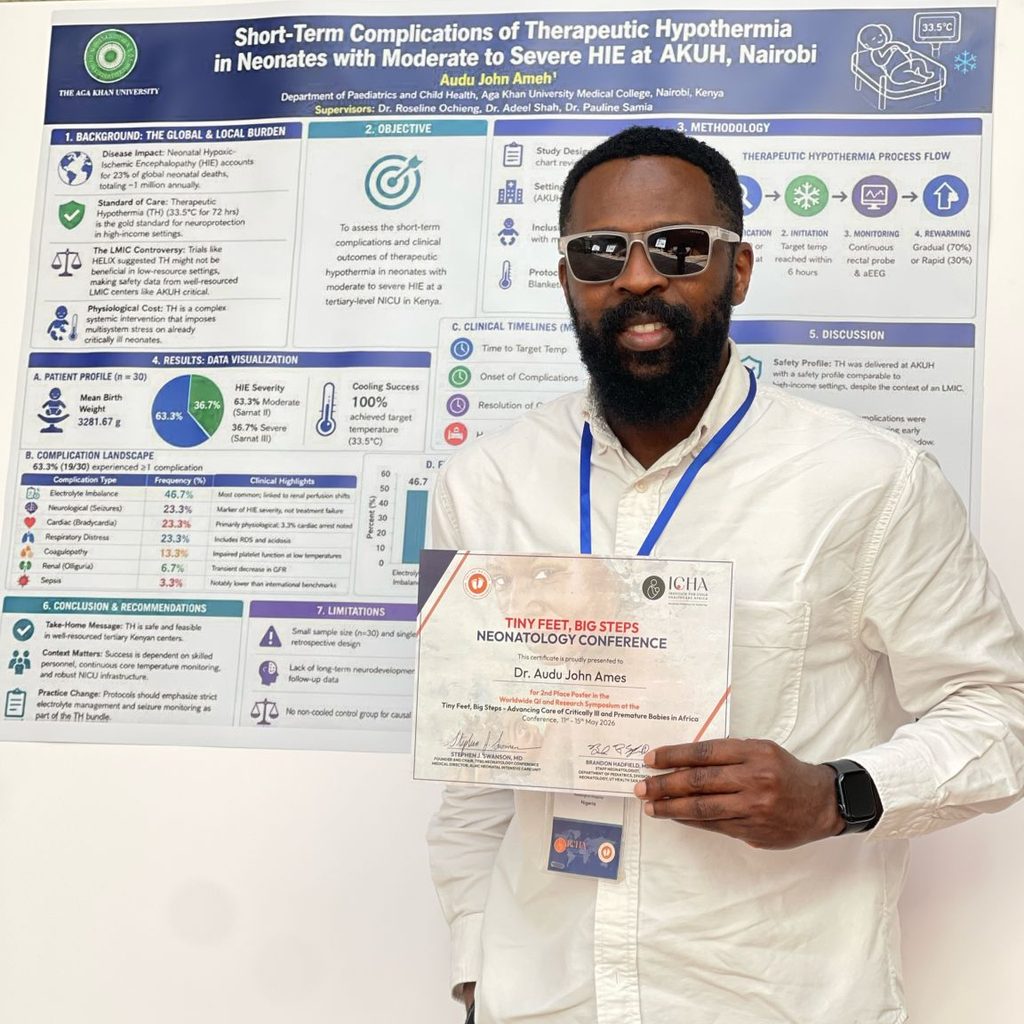
Award-winning research from Dr. John Audu, Aga Khan University Hospital Nairobi, explores the challenges and opportunities of providing specialized newborn care in resource-limited settings.
At the 2026 Tiny Feet Big Steps (TFBS) Neonatology Conference in Arusha, Tanzania, a research poster examining therapeutic cooling for newborns with moderate to severe hypoxic-ischemic encephalopathy (HIE) received Second Place recognition.
The presentation, titled “Complications of Therapeutic Cooling on Neonates with Moderate to Severe HIE at Aga Khan University Hospital Nairobi,” explored an important challenge in neonatal care: how to safely implement specialized treatments in healthcare settings where resources, monitoring capabilities, and clinical infrastructure may differ.