Our Model
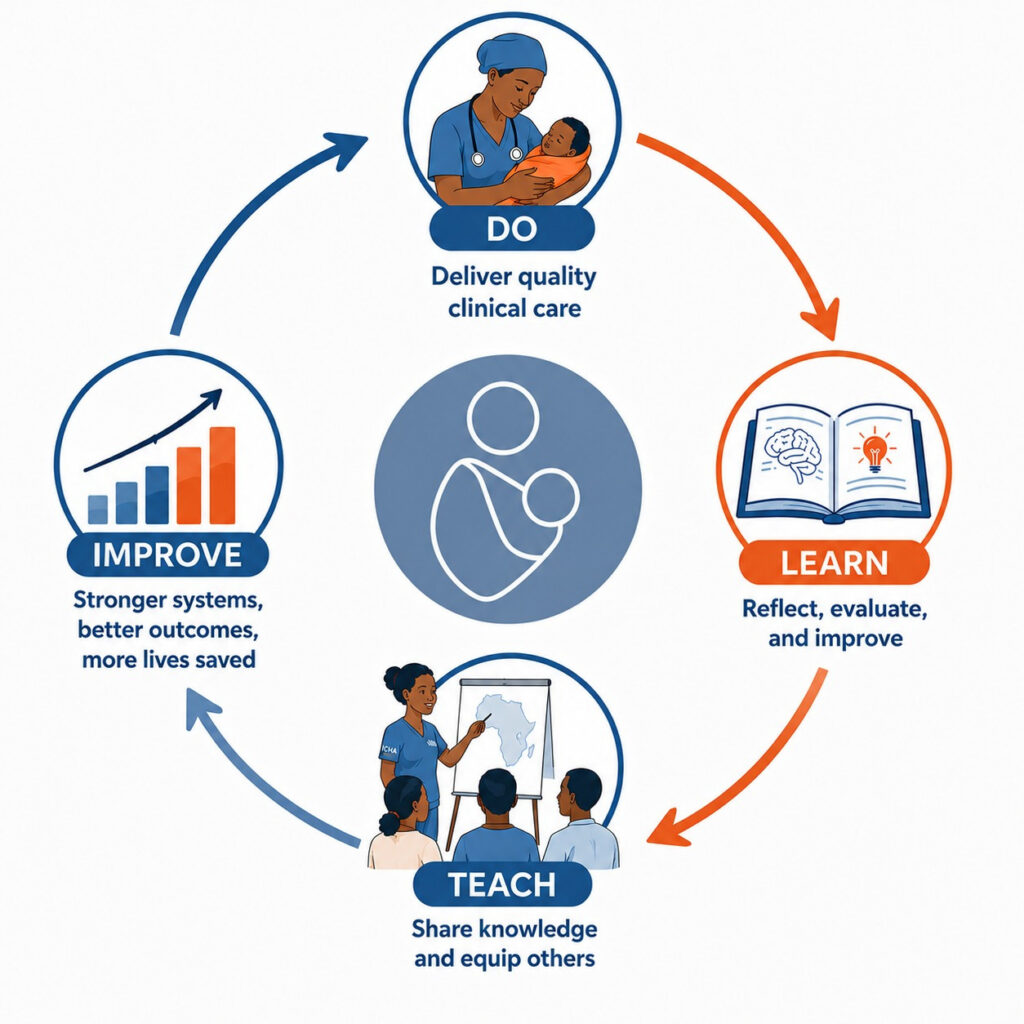
The ICHA Learning Cycle
Do • Learn • Teach • Improve • Multiply
ICHA is built on a simple idea: We teach what we do, and we do what we teach.
Everything we do flows from this conviction. We believe that excellent education begins with excellent clinical care. The most valuable lessons are learned at the bedside, refined through experience, tested in practice, and shared with others. In turn, teaching, research, and collaboration continually improve the care we provide.
The ICHA Learning Cycle
- DO: We provide compassionate, evidence-based care for children and families.
- LEARN: Every patient, every innovation, and every partnership helps generate practical knowledge.
- TEACH: We translate that knowledge into education, mentorship, and practical resources that strengthen healthcare professionals across Africa
- IMPROVE: Healthcare professionals deliver better care. Health systems become stronger. More children survive and thrive.
- MULTIPLY
Putting the Model into Practice
Everything we do falls within three interconnected areas of work.
Care
(Providing Care)
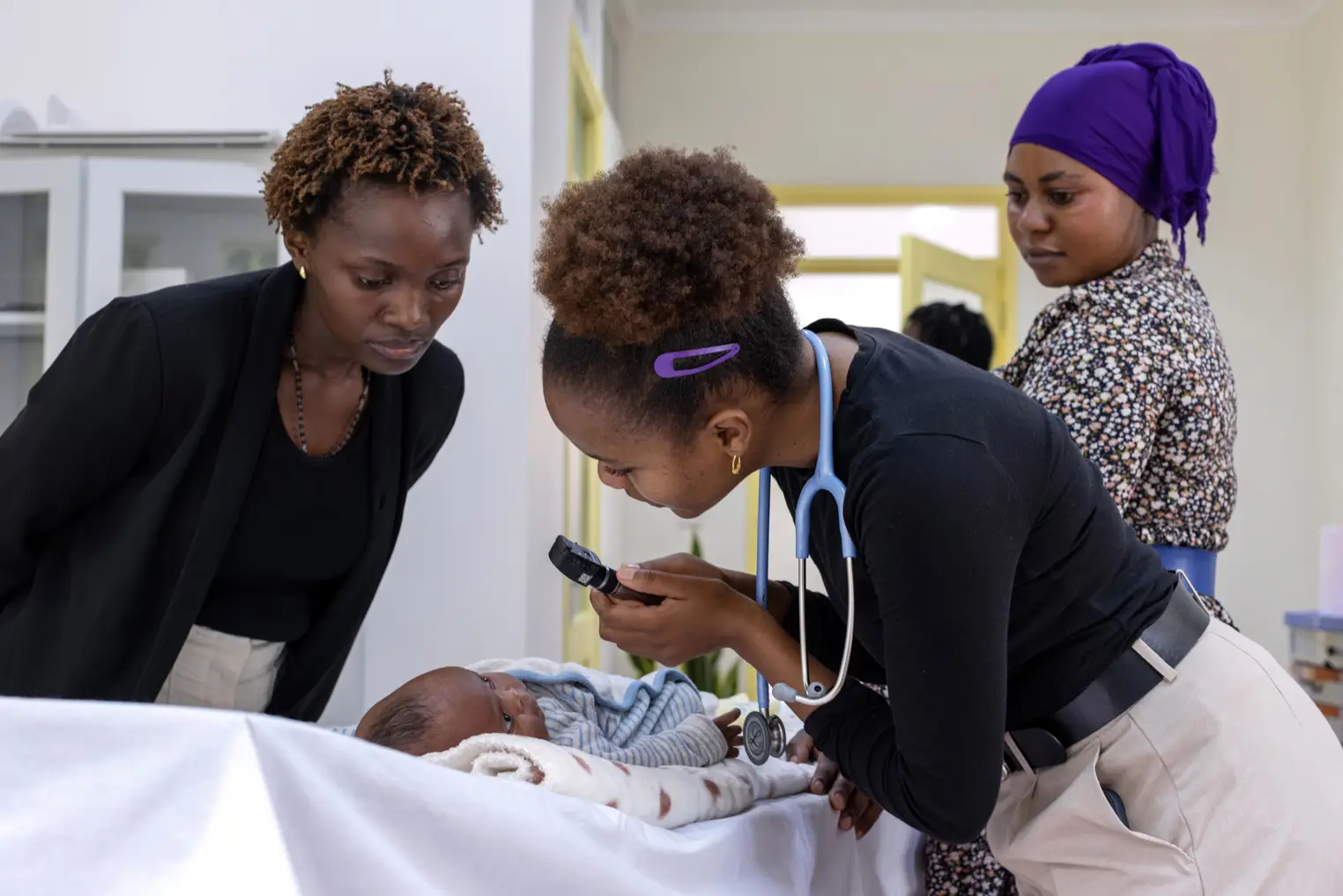
Providing exceptional pediatric, neonatal, and maternal care in Arusha, Tanzania.
Every patient cared for improves our understanding, strengthens our teaching, and helps improve child healthcare across Africa.
Our core areas of work:
- the Neonatal Intensive Care Unit (NICU) at JKCI-Arusha Lutheran Medical Centre where critically ill and premature newborns receive specialized care.
- the Arusha Pediatric & Maternal Care Centre (APMC), opened in 2026 as a center of excellence providing comprehensive pediatric and maternal healthcare.
Capacity
(Education & Training)
We don’t simply train clinicians—we help develop educators, mentors, and leaders who strengthen healthcare long after they return home.
- The Tiny Feet Big Steps neonatology conferences are designed to build lasting clinical capacity across Africa.
- Through our Training of Trainers approach, experienced physicians and nurses are equipped not only to deliver exceptional neonatal care, but also to become educators, mentors, and leaders within their own hospitals and healthcare systems.
- The Every Breath Counts Handbook was developed by Dr. Swanson and the neonatal team to share proven protocols for caring for premature and critically ill newborns in low-resource settings.
Catalyst
(Research, Innovation & Advocacy)
Generating Evidence. Driving Innovation. Influencing Change.
Research generates evidence. Innovation transforms that evidence into practical, context-appropriate solutions. Advocacy helps those solutions influence clinical practice, strengthen healthcare systems, and improve outcomes for children across Africa.
Our goal is not simply to produce research, but to transform knowledge into action—helping healthcare professionals, hospitals, and policymakers make informed decisions that improve outcomes for children.
Local Care. Continental Impact
Care is intentionally local and comprehensive; Capacity and Catalyst are intentionally continental in reach, allowing ICHA to combine deep local excellence with broad, leveraged influence across Africa.
Why This Model Improves on Existing Efforts
Many external neonatal health initiatives have historically relied on imported equipment, short-term missions, or one-time training events. While these efforts can provide immediate support, they often have limited long-term impact without ongoing mentorship, locally appropriate solutions, and sustained partnerships. ICHA’s model is different: it is developed, tested, and refined continuously by practitioners who remain in-country and provide hands-on care in the very settings they teach in, so every protocol, every page of the Every Breath Counts manual, and every TFBS conference session is field-tested and immediately usable in a resource-limited hospital rather than adapted from high-income-country practice.
The Mafiga Matatu:
A Foundation for Lasting Impact
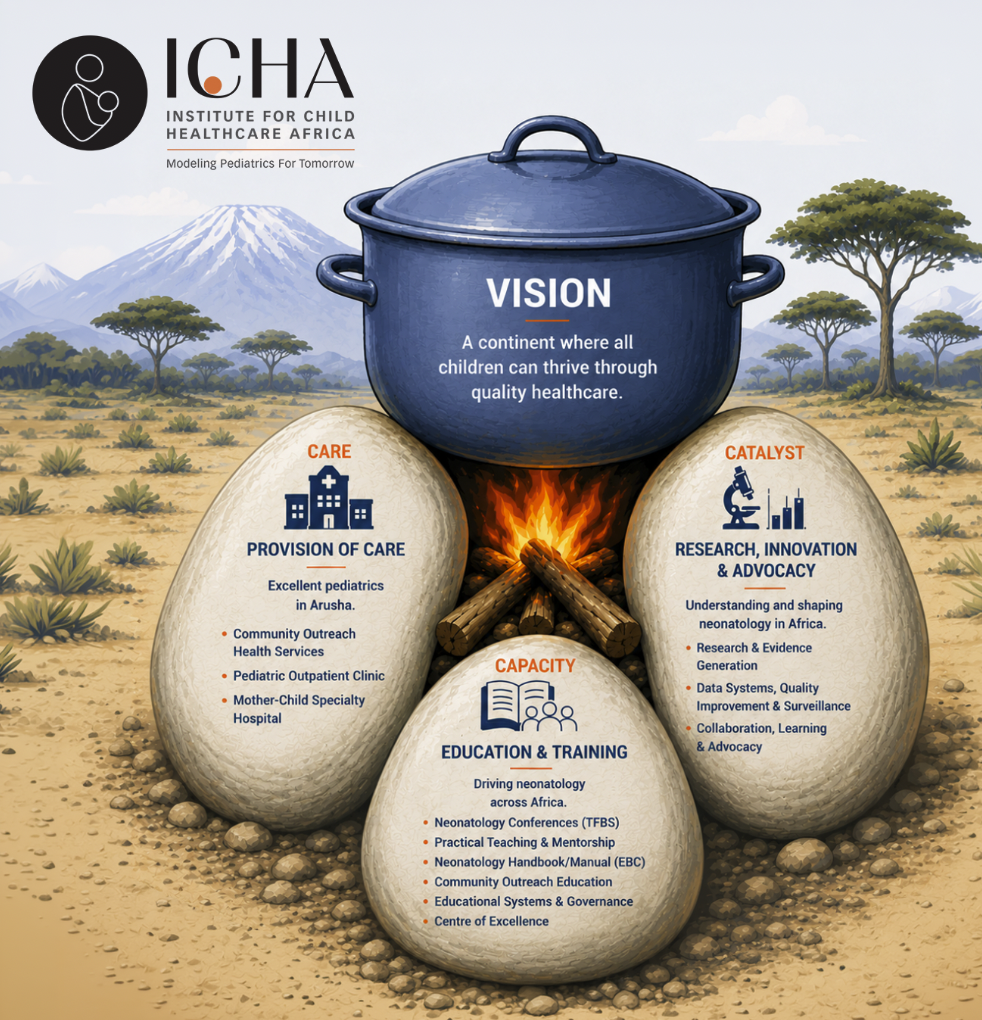
Across Tanzania and much of East Africa, families have traditionally cooked over a mafiga matatu—a three-stone hearth that supports a cooking pot above the fire. Like the three stones, each supporting the others, it symbolizes stability, partnership, and the strength that comes from working together.
At ICHA, the mafiga matatu reflects our approach to advancing child healthcare across Africa. The cooking pot represents our vision of a continent where all children can thrive through quality healthcare, supported by three interconnected pillars: Care, providing exceptional pediatric and neonatal healthcare; Capacity, equipping healthcare professionals through education and training; and Catalyst, advancing research, innovation, and quality improvement.
Like the three stones of the mafiga matatu, each pillar is essential. Together, they create a strong and sustainable foundation for healthier children, stronger health systems, and lasting impact across Africa.
Our Integrated Approach: Better care for children across Africa.
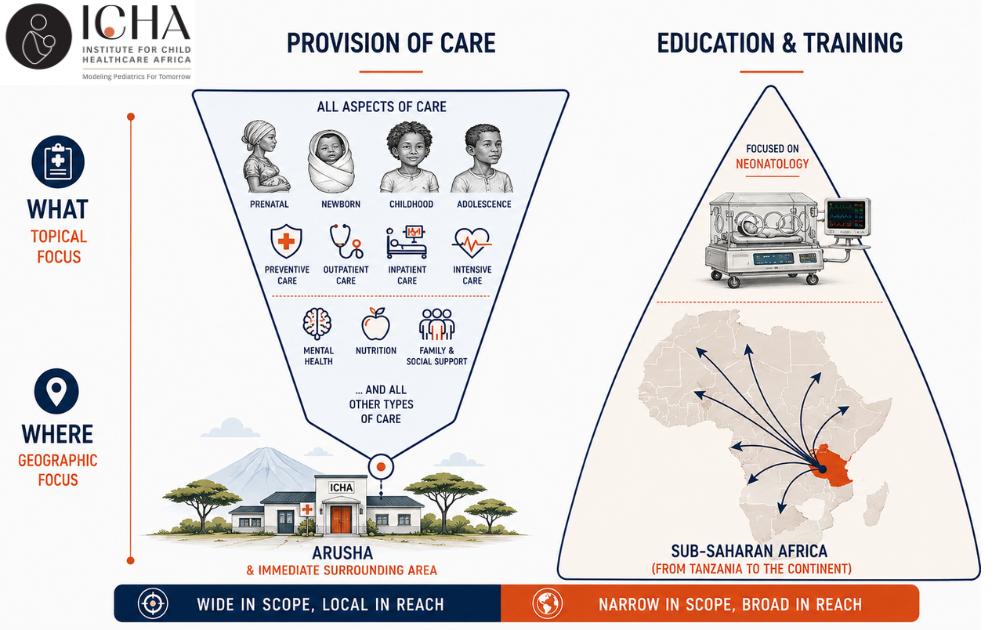
ICHA’s work is intentionally connected across two complementary areas:
PROVISION OF CARE — Wide in scope, local in reach
In Arusha and the surrounding area, we provide care across the continuum—from prenatal and newborn care through childhood and adolescence. This includes preventive, outpatient, inpatient, intensive, nutritional, mental health, and family support services.
EDUCATION & TRAINING — Narrow in scope, broad in reach
Our educational work focuses deeply on neonatology, developing practical skills and knowledge that can be shared with healthcare professionals far beyond Tanzania.
What we learn through clinical care informs what we teach. What we learn through teaching, mentoring, research, and collaboration strengthens the care we provide.
Local clinical experience becomes practical knowledge—and practical knowledge can travel.
From Arusha to hospitals across Sub-Saharan Africa, our goal is to strengthen healthcare systems and help more children receive the quality care they deserve.